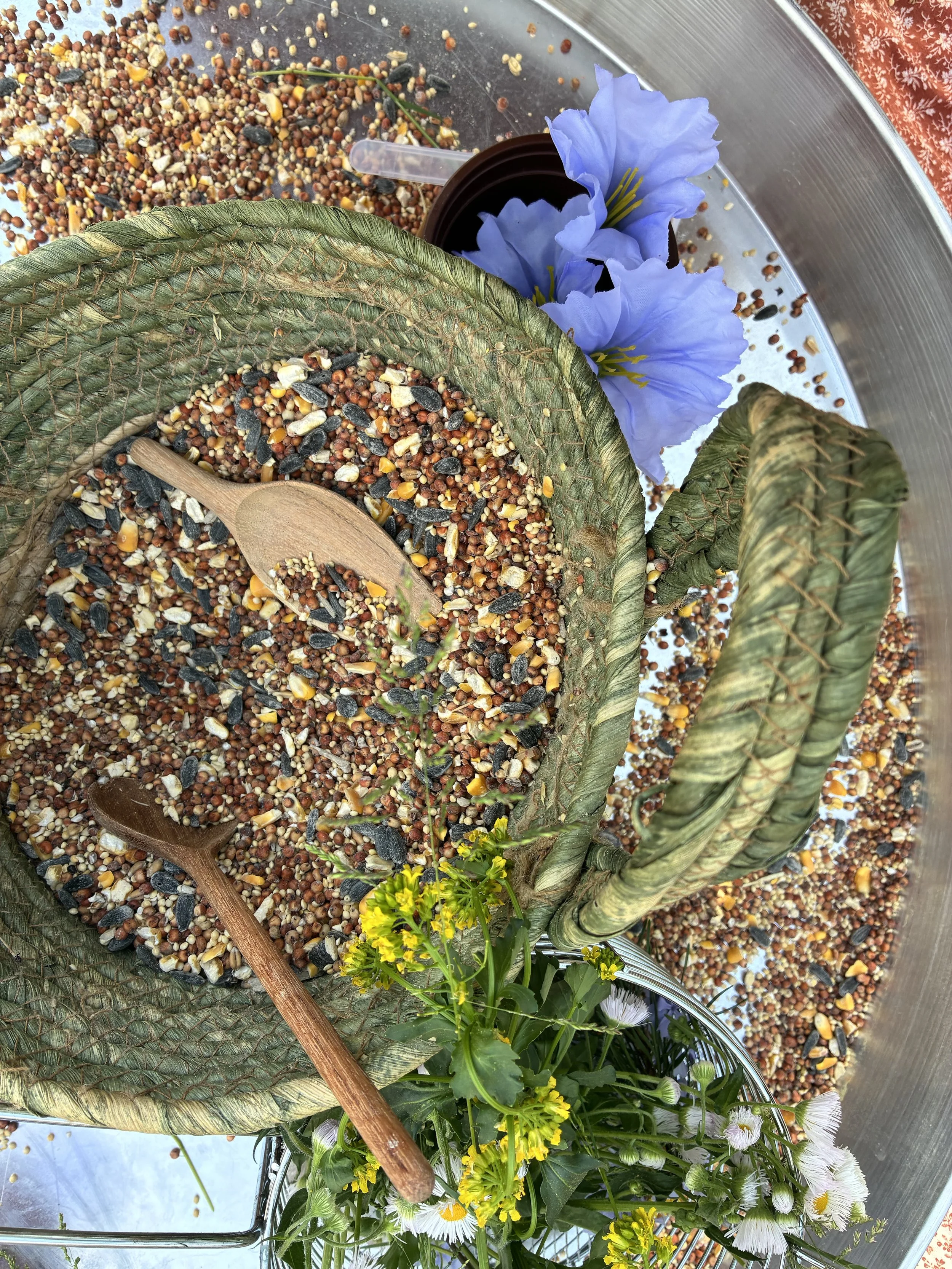

Spring Garden Sensory Bin 🌼
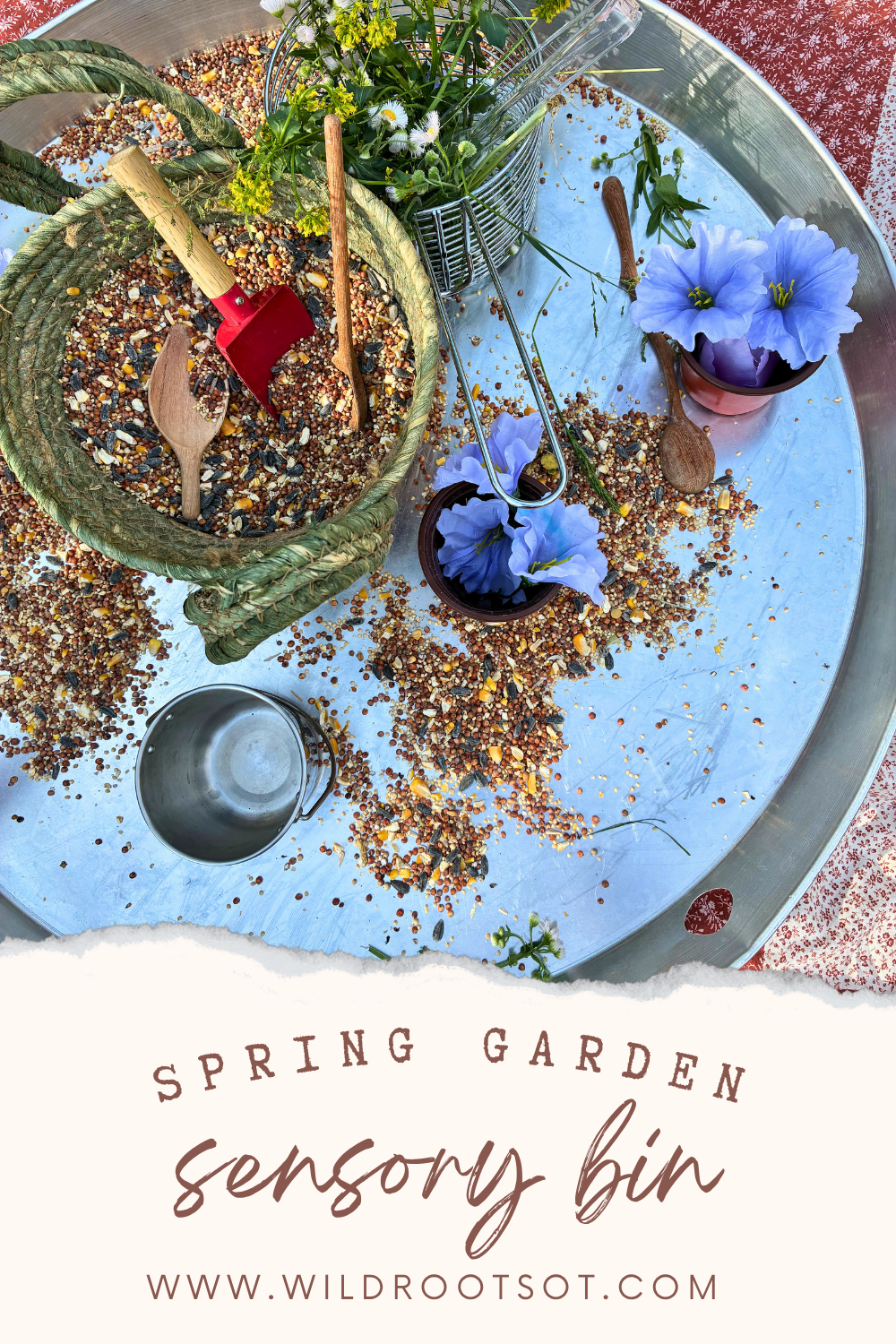
Spring is a season that naturally invites curiosity, exploration, and hands-on discovery—making it the perfect time to introduce sensory play inspired by the garden! With just a few simple materials, you can create a vibrant, nature-themed sensory experience that encourages creativity, fine motor development, and imaginative play.
🌼 Creating a Spring Garden Sensory Bin
A spring sensory setup doesn’t need to be complicated.
You will need:
A shallow bin or tray as your base,
Bird seed,
Small plastic flower pots,
A mix of real or artificial flowers,
Fresh herbs like mint, rosemary, or basil (for an added sensory experience to smell/taste)
A variety of scoops, cups, and small shovels
Arrange the materials in an inviting way, perhaps placing the pots to one side and scattering flowers and herbs throughout the bin. You can even tuck some herbs beneath the bird seed for children to “discover” as they dig.
🌿 The Sensory Experience
What makes this setup so engaging is the combination of textures, colors, and scents!
Children can:
Scoop and pour bird seed, developing coordination and control
“Plant” flowers into pots, encouraging imaginative play
Smell and explore herbs, adding a calming, sensory-rich dimension
Dig and uncover hidden treasures
The loose parts allow for open-ended play—there’s no right or wrong way to explore!
🌸 Learning Through Play
This activity naturally supports a range of developmental skills:
Fine motor skills: Scooping, pouring, and pinching herbs strengthen small hand muscles
Sensory processing: Engaging touch, smell, and sight in a safe, playful way
Language development: Talking about textures, scents, and pretend scenarios
Imagination: Creating stories and roles around gardening and nature
🧠 An OT Perspective: Why Sensory Play Matters
As an occupational therapist, I love using sensory play as a purposeful and powerful way to support development. Activities like this spring garden sensory bin go far beyond simple play—they help build the foundational skills children need for everyday tasks.
The combination of scooping, pouring, and digging supports fine motor strength and coordination, which are essential for skills like handwriting, buttoning, and feeding. Using small tools and manipulating herbs or flower pieces encourages a pincer grasp (pinch), helping to refine precision and control in little hands.
This setup also promotes:
-Bilateral coordination: Using both hands together while stabilizing a pot and scooping seed
Hand-eye coordination: Accurately pouring and placing materials
Motor planning: Figuring out how to scoop, transfer, and “plant” items
Sensory regulation: The calming, repetitive nature of scooping and pouring can help children feel more organized and focused
The varied textures and scents provide rich sensory input that supports sensory processing and integration, helping children better understand and respond to the world around them.
What I love most is that it looks like simple, joyful play—but underneath, it’s building critical developmental skills in a natural and engaging way.
🌷 Tips for Success
Place a mat or sheet underneath to catch spills for easy cleanup
Supervise closely, especially with younger children who may put materials in their mouths
Swap out materials occasionally to keep the experience fresh (try adding pebbles, faux insects, or small watering cans)
Store materials in containers so you can quickly set up and revisit the activity
Happy playing! 🌼