

Frog Pond Sensory Play🐸
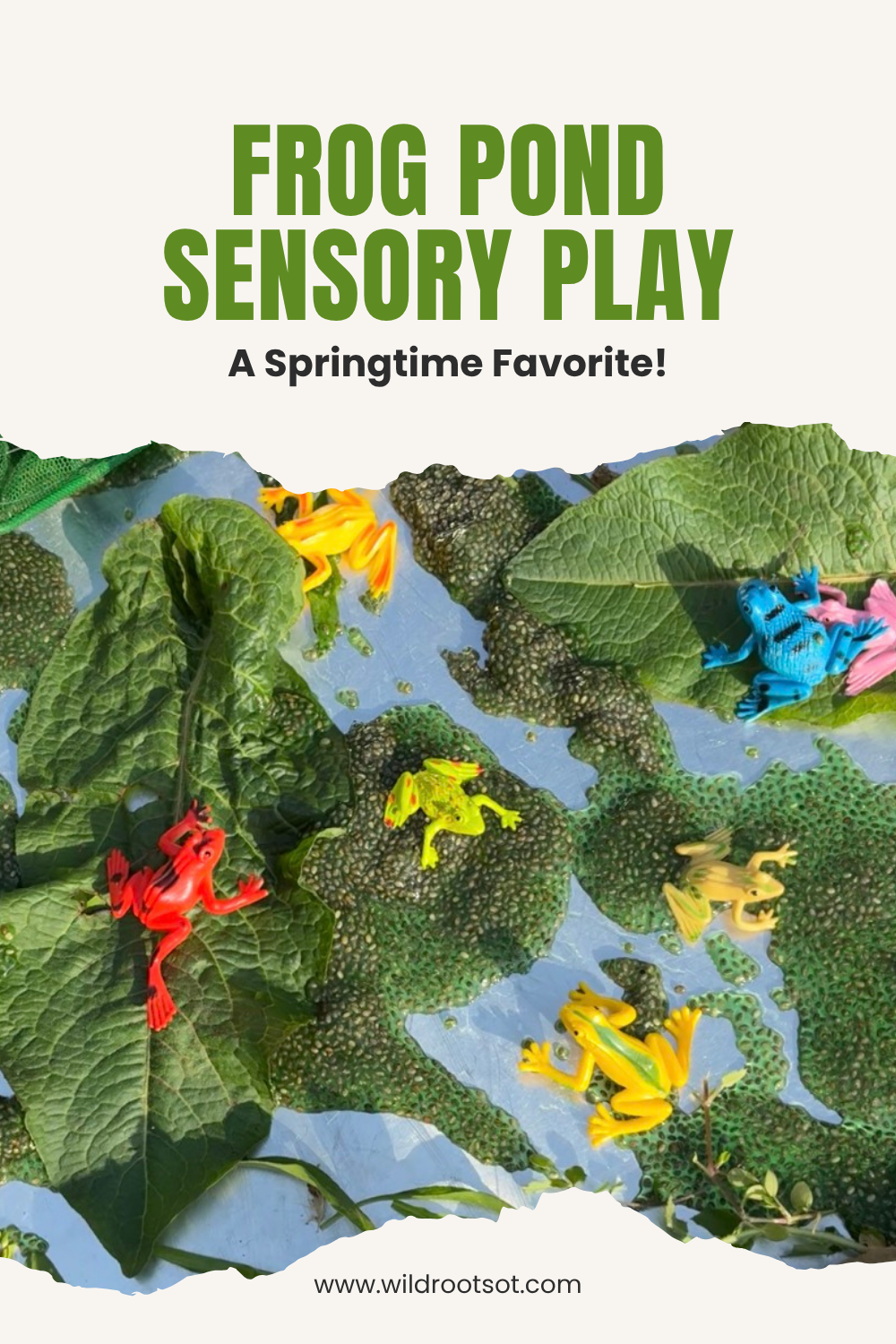
There’s something about when spring rolls around that makes messy water play SO much fun and exciting for both kiddos and adults! We have been cooped up and bundled up all winter and finally the flowers are blooming and the forest is coming alive with the sounds of birds, frogs, and bugs all around us! This frog pond sensory station is the perfect way to welcome in the spring season and has quickly become a favorite for children of all ages!
It’s simple to set up, incredibly engaging, and full of opportunities for sensory exploration, creativity, and connection with the outdoors.
What You’ll Need:
A large, shallow container with a lip (we love using a water heater pan as an easy and inexpensive option)
Toy frogs
Small rocks, sticks, leaves, or weeds (any natural materials you can gather!)
Chia Seed “Frog Eggs”
Soak about 1 cup of chia seeds in 2 cups of water overnight
Add 3–4 drops of blue or green food coloring for a fun pond-like effect
Kids fishing or aquarium nets
How to Set It Up:
Place your container outside and begin layering in your natural materials—rocks, sticks, leaves—creating a little frog habitat. Add your toy frogs throughout the space, tucking some under leaves or behind sticks for a fun surprise.
Add your chia seed “frog eggs” for that squishy, sensory-rich experience kids love!
Invite your kiddos to help you set up by pouring water into the pond to fill the froggy habitat.
Set out small cups and nets, and let the play begin!
How Kids Can Explore:
Encourage your child to:
Scoop and pour water into the pond using cups
Search for hidden frogs using nets
Feel and explore the different textures—slimy, squishy, rough, and smooth
Play “froggy I spy”
Gather wildflowers or extra nature treasures to add to their pond
And then… step back and follow their lead.
Why We Love It:
This activity supports so many areas of development in a natural, joyful way:
Sensory exploration through textures and water play
Fine motor skills with scooping, pouring, and grasping
Visual perceptual skill building through searching for camoflauged frogs in the pond
Imaginative play as kids create their own frog world
Connection to nature using real outdoor materials
But more than anything, it creates space for open-ended play—the kind where kids slow down, get curious, and fully immerse themselves.
I hope this inspires lots of outdoor sensory play for your family this spring. There’s nothing quite like watching your little ones light up while exploring something so simple and magical.